

Introduction
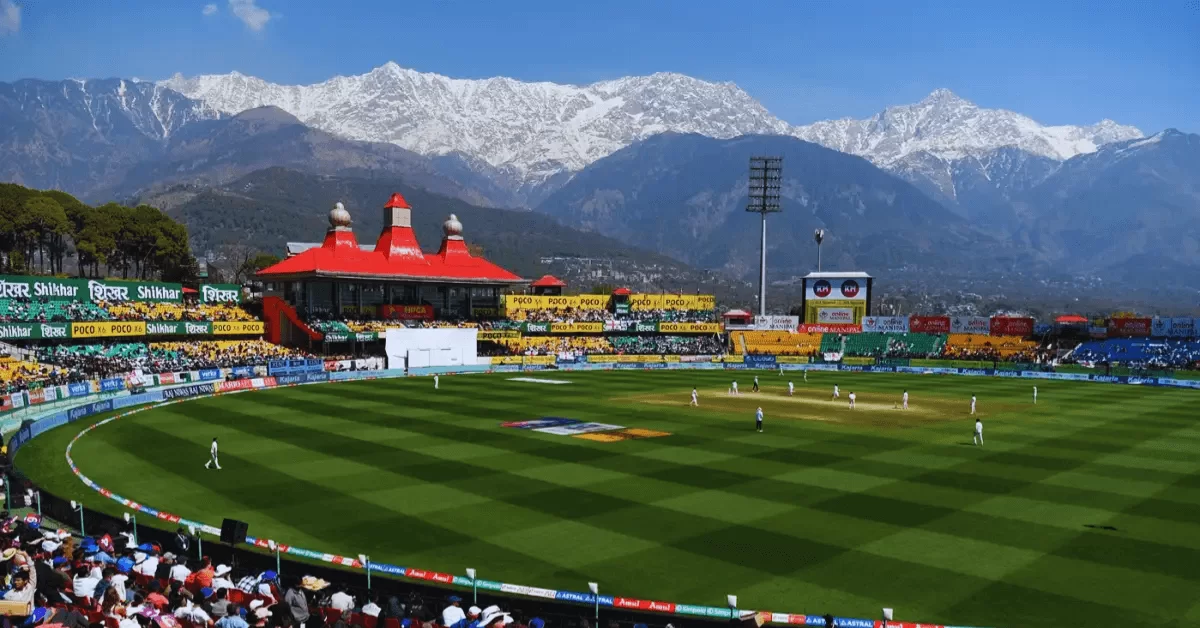
Every IPL venue has its character. Chinnaswamy in Bengaluru is famous for its batting surface and passionate crowd. Eden Gardens in Kolkata carries 160 years of cricket history. Wankhede in Mumbai has the energy of a city that lives cricket every day. But only one IPL venue has a backdrop that genuinely defies description: the HPCA Stadium in Dharamsala, Himachal Pradesh, where the outfield sits at 1,457 metres above sea level and the snowcapped peaks of the Dhauladhar range provide a panoramic view behind the southern stands that photographers have been trying to capture adequately for 30 years.
The Ground — Cricket’s Most Extraordinary Setting
The HPCA Stadium has a playing capacity of approximately 25,000 — modest by IPL standards, where some venues seat 80,000+. But no other cricket ground in the world looks like this. The Himalayan backdrop behind the stands is not a seasonal backdrop dependent on snowfall — the peaks are permanently snowcapped and visible on most match days, creating an image that combines the mundane (cricket stumps, boundary ropes, sight screens) with the extraordinary (30,000-foot mountain faces visible 40 kilometres away). IPL matches at Dharamsala attract television directors who simply hold the wide shot longer than at any other venue, because the wide shot contains one of the world’s most spectacular landscapes as standard background.
The Pitch — What High Altitude Does to Cricket
Cricket at Dharamsala’s altitude has specific characteristics. The ball travels further in thinner air — the same shot that clears the boundary by 5 metres at sea level will clear it by 8-10 metres at 1,457 metres. Pace bowlers can struggle with reduced oxygen availability during their run-up, affecting their maximum pace over long spells. Spin bowling, which depends on ball revolution rather than air resistance, is relatively unaffected. The pitch itself is well-maintained and produces results across the spectrum — flat tracks for batting festivals and greener surfaces for pace-oriented contests. The venue serves as Punjab Kings’ second home alongside New Chandigarh’s PCA Stadium.
The Journey to Get There and Why Players Love It
Dharamsala requires a 2-hour drive from Gaggal Airport, which itself can only accommodate small aircraft. Larger international groups must fly to Chandigarh or Delhi and drive for several hours through mountain roads that are genuinely beautiful and genuinely challenging. Despite this travel difficulty, players who have played at Dharamsala consistently describe it as among their favourite venues in world cricket. The combination of the scenery, the fresh mountain air, the compact crowd that creates intense noise despite the smaller capacity, and the sense of being genuinely removed from the cricket circuit’s usual urban grind makes it an experience unlike any other on the IPL’s ground rotation.
DID YOU KNOW? Dharamsala’s HPCA Stadium is the highest-altitude major cricket venue in the world. The Tibetan spiritual leader the Dalai Lama’s residence at McLeod Ganj is just a few kilometres from the stadium — making it the only cricket ground within walking distance of a major Buddhist monastery complex.
Final Verdict Cricket grounds are many things: historic venues, engineering achievements, atmospheric cauldrons. Dharamsala’s stadium is the only one that is also genuinely breathtaking in the literal sense — the Himalayan backdrop is so extraordinary that even the players pause to appreciate it before the first ball is bowled.