

Introduction
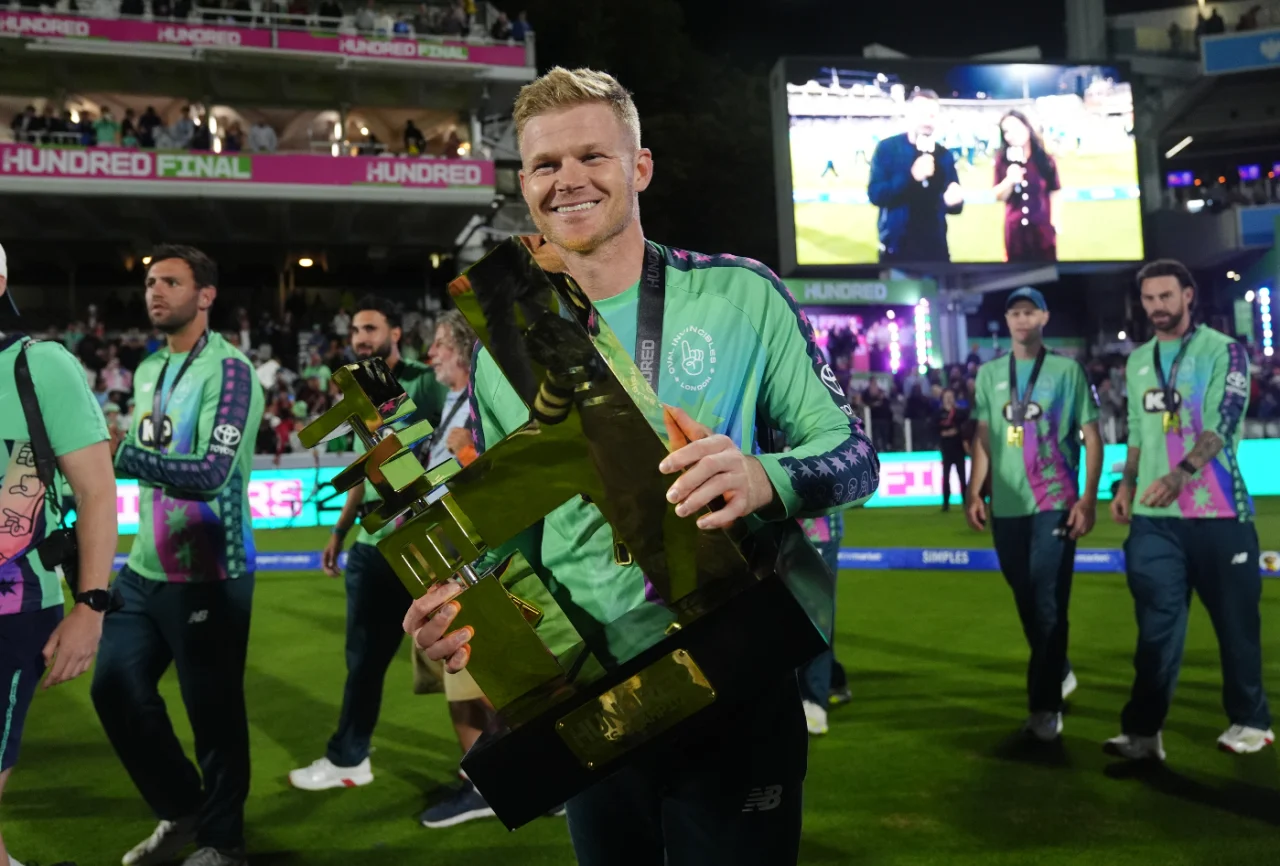
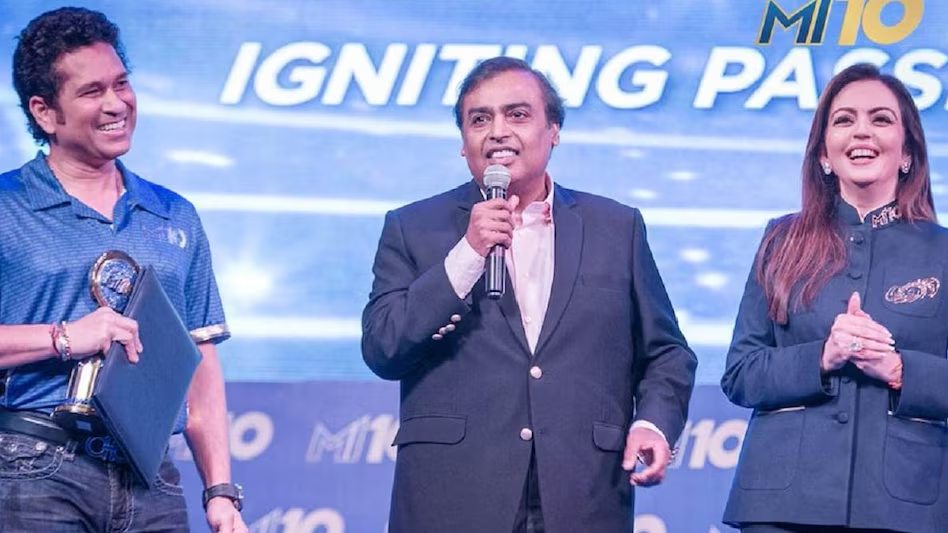
In January 2008, Mukesh Ambani sat in a Mumbai hotel ballroom and paid Rs. 742 crore for the right to run a cricket franchise. This was, at the time, more money than any Indian sports team had ever cost. His advisors reportedly questioned the figure. The cricket establishment raised eyebrows. The amount seemed, to most people watching, excessive for a competition that had never played a single match. Eighteen years later, Mumbai Indians have won 5 IPL titles — the joint most in competition history — and the franchise is valued at well over $1 billion by independent analysts. Ambani did not overpay. He underpaid. Here is how the most successful franchise in IPL history was built.
The First Five Years — Buying Stars Without Winning
Mumbai Indians’ early IPL years are cricket’s most instructive lesson in the difference between assembling talent and building a team. Ambani bought Ricky Ponting, Sachin Tendulkar, Lasith Malinga, and Harbhajan Singh — a more famous set of cricketers than any other franchise could point to. And yet they did not win. Between 2008 and 2012, MI reached one final (2010, lost) and consistently underperformed relative to their squad quality. The problem was not talent. It was structure. There was no clear team identity, no consistent batting order, no captain who had the authority to impose his vision on a dressing room full of legends who had each won things individually before. The talent was extraordinary. The team was ordinary.
The Rohit Decision — The Move That Changed Everything
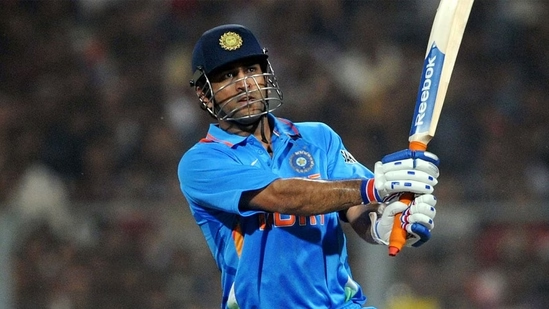
Before the 2013 season, MI made the decision that built their dynasty: they made 25-year-old Rohit Sharma captain, replacing Ricky Ponting. On paper, it was almost insulting to Ponting — a three-time World Cup winner replaced by a young batsman who had never captained at this level. In practice, it was one of the most intelligent franchise decisions ever made. Rohit understood the MI dressing room, understood Indian conditions, and brought a specific calm to tactical decision-making that Ponting — brilliant as he was in Australian conditions — had not been able to replicate in an Indian franchise environment. MI won the IPL in 2013. Rohit’s first season as captain. They won again in 2015, 2017, 2019, and 2020. Five titles in eight seasons.
What Makes MI Different — The Factory That Keeps Working
Mumbai Indians’ success is not built on spending the most. CSK have spent comparably. Other franchises have invested heavily. MI’s advantage is structural: a coaching philosophy that identifies specific T20 roles and recruits and develops players for those specific roles. The Malinga-Bumrah knowledge transfer — where Malinga spent years teaching Bumrah the death-bowling craft that made him the world’s best T20 bowler — happened inside MI’s training structure. Kieron Pollard’s 13-season culture-carrier role happened inside MI. The development of Tilak Varma, Suryakumar Yadav’s evolution from MI squad player to India captain — all MI productions. Ambani paid Rs. 742 crore for a cricket franchise. What he actually bought was the right to build something that would outlast any individual player, any individual season, and any individual setback. He built correctly.
DID YOU KNOW? Mumbai Indians have used the IPL Impact Player rule more effectively than any other franchise since its introduction in 2023, according to batting statistics showing MI average the highest team totals under the rule. They enter IPL 2026 as the betting market’s favourite at 9/2 odds.
Final Verdict Rs. 742 crore in 2008. Five IPL titles. The most successful franchise in the competition’s history. Mukesh Ambani’s investment in cricket is the most successful private investment in sport in Indian history. He did not just buy a cricket team. He built an institution.